Metal Beads for Jewelry Making
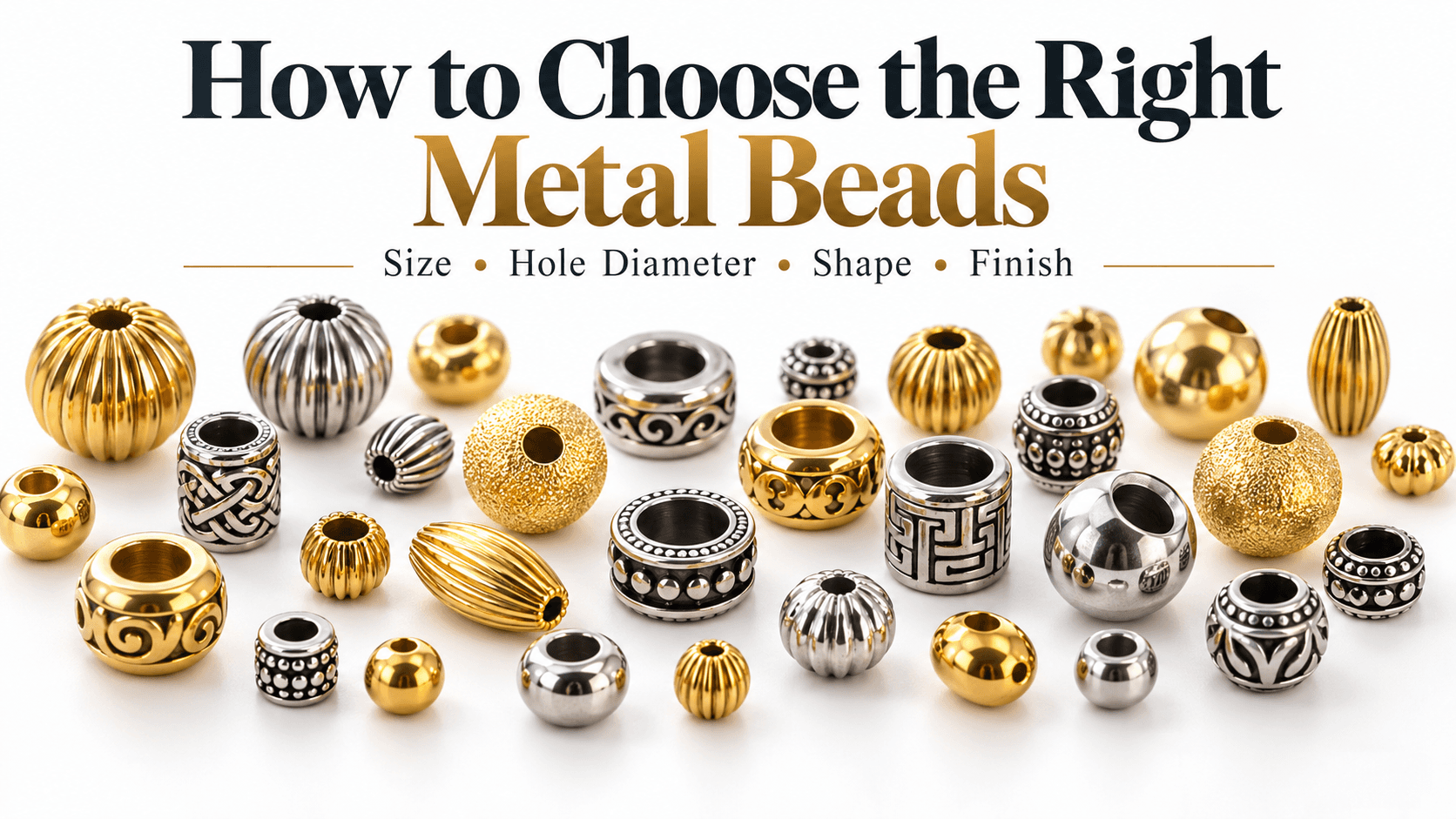
How to Choose the Right Metal Beads for Jewelry Making: Size, Hole Diameter, Shape and Finish Matter
Choosing the right metal bead may seem simple, but for jewelry designers, accessory brands and manufacturers, even a small difference in size or hole diameter can affect the final look and assembly of a product. As demand grows for customized jewelry components, buyers looking for wholesale metal beads for jewelry making are paying closer attention not only to appearance, but also to dimensions, structure, material and surface finish.
Dongguan Jialin Hardware Jewelry Co., Ltd., a manufacturer of metal jewelry components, highlights several practical factors that should be considered when selecting metal beads for bracelets, necklaces, chains, pendants and other accessory designs.
Different Designs Require Different Bead Sizes
There is no universal bead size that works for every jewelry project. Small beads can provide subtle spacing and detail, while larger beads create stronger visual impact and are often used as focal elements.
For example, spacer beads used between charms may need to remain compact so they do not overpower the main design. In contrast, larger decorative beads or viking beads for jewelry making are often chosen for bracelets, necklaces or leather-cord designs where a heavier and more distinctive appearance is preferred.
Before placing a bulk order, buyers should consider the overall proportions of the jewelry, the thickness of the chain or cord and the spacing required between components.
Outer Diameter Is Only Half of the Specification
A bead may look suitable from the outside but still be unusable if the hole diameter is incorrect.
The inner hole must match the chain, cord, wire, leather strap or connecting component used in the design. A hole that is too small prevents assembly, while an oversized hole can cause unwanted movement and affect the finished appearance.
For buyers sourcing from a stainless steel metal spacer beads supplier, providing both the required outer diameter and inner hole diameter helps reduce sampling errors and makes component matching more accurate.
This is especially important for OEM and custom jewelry projects, where the bead needs to work with an existing chain or accessory structure.
Shape Changes the Character of the Jewelry
Metal beads are available in many shapes, including round beads, barrel shapes, tubes, geometric forms, irregular beads and decorative spacer beads.
Round beads offer a clean and versatile appearance, while shaped or sculpted beads can add stronger visual identity. Spacer beads are frequently used to separate charms, gemstones or chain sections and help improve the rhythm of the overall design.
For more distinctive collections, textured or Viking-inspired beads can bring a handcrafted, vintage or rugged character to bracelets and necklaces.
Surface Finish Should Match the Design Style
The same bead shape can create completely different results depending on its finish.
Smooth polished beads provide a clean and modern appearance, while brushed, patterned, engraved, oxidized or antique finishes create more texture and depth. Stainless steel is also widely selected because of its durability, corrosion resistance and suitability for different plating and finishing processes.
Manufacturers and brands sourcing wholesale metal beads for jewelry making should compare samples under real assembly conditions rather than evaluating individual beads alone.
Ultimately, selecting the right metal bead is about matching the component to the design—not forcing the design to adapt to an unsuitable component. By considering size, hole diameter, shape, finish and application together, jewelry brands can achieve a more balanced appearance and smoother production process.
Brass Tie Clips with Black Electrophoretic Coating